Monday, April 22, 2013

Africa's Conflict Diamonds

If you missed today's class, check out the following video:

http://www.youtube.com/watch?v=aaqQjIzIbiY

Use it to answer the following questions on loose leaf paper (30 points):
  1. List the city and country where the reporter began his story.
  2. Why were the diamonds so important to the rebels?
  3. What is the “symbol” of modern Sierra Leone?
  4. What was the estimated value of the 110 carat rough cut diamond?
  5. What percentage of Sierra Leone’s diamonds are smuggled out of the country?
  6. Why have many farmers in the countryside abandoned their fields?
  7. How much earth must be removed to find a pound of diamonds?
  8. The reporter watched a man digging and sifting for diamonds.  He found one!  How many days did that man dig to find that one diamond? What was the street value of it in U.S. Dollars?
  9. Approximately how many diamond miners work in Sierra Leone? How many of them have licenses to do so?
  10. Explain how the reporters were able to film the diamond transactions without being caught?
  11. List two of the three reasons why diamonds are the world’s perfect currency.
  12. Explain why the diamond divers do not work on Fridays.
  13. Besides being bought and sold, what happens to the diamonds when the reach Antwerp, Belgium?  They undergo two steps.  What are these two steps?
  14. According to the man at Rosy Blue, it is nearly impossible to know the origins of every diamond.  Explain why.  Hint:  It has something to do with the sorting process.

Sunday, April 14, 2013

We Are All African Under The Skin

A Masai tribesman from East Africa's Rift Valley.

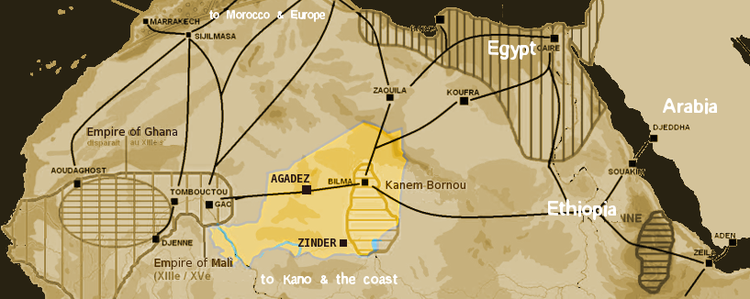
Over the past several months, we have examined the historical importance of two African regions: the Nile River Valley and West Africa. Today we will take a look at the shared African ancestry of all humankind.

In parts 1 and 2 of this lesson, we discussed in general the genetic roots of humanity. In the remainder of our time today, you will look at one person's attempt to trace his ancestry and evaluate the results of his inquiry.

Part 3: "In the Footsteps of My Ancestors"
  1. Visit the photo gallery produced by American journalist Donovan Webster to discover the roots of one person. Use this information to complete "Part 3" on your worksheet.
  2. Use Google Maps to locate each of the countries Webster visits.
Want More Information?
Check out National Geographic's Genographic Project to learn more about how advanced DNA analysis is being used to answer questions about human history.

Monday, March 18, 2013

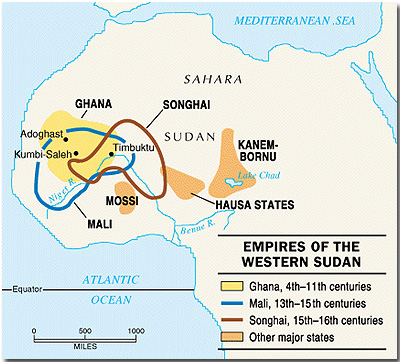
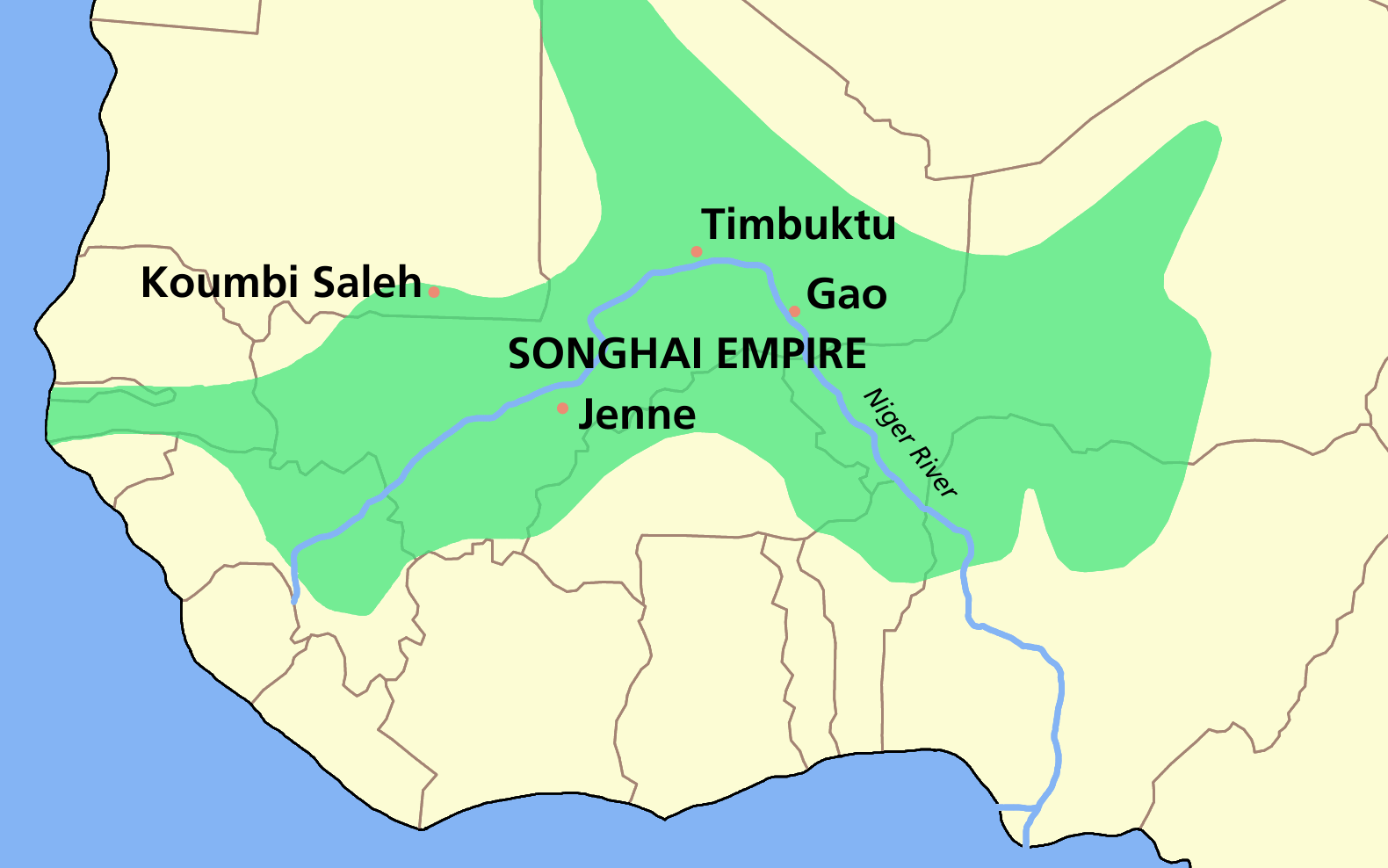
West African Empires - Songhai!


Over the past couple of days, we learned about two West African trading empires: Ghana and Mali. Today, you will have the opportunity to research the kingdom that conquered them all: Songhai.

The websites needed for each section are listed below.

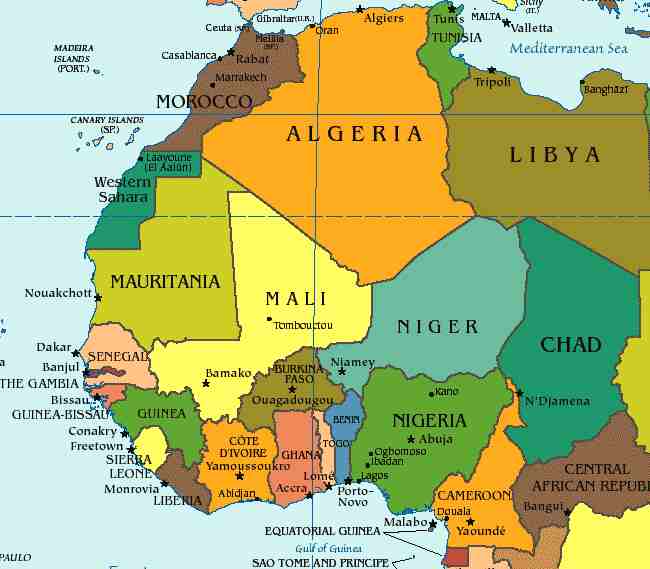
Part 1: Landforms in West Africa (10 points)
    Part 2: Researching West Africa's Past: Songhai

      Wednesday, March 6, 2013

      Ancient Egypt Presentations

      Now that you've finished completing your research sheets using the British Museum website, it's time to put together the presentation you'll use to teach the class!

      First of all, you need to create a slide show using PowerPoint. This is what we'll work on during today's class. This will be a 100 point project grade.

      You must have at least 6 slides:
      1. Title slide (10 points)
        1. Your title should be the main idea of your project.
        2. Also include your group members' names on this slide.
        3. Include a picture that goes with your topic!
      2. 7 Elements of Culture slide (10 points)
        1. Include the two elements of culture you chose to relate to your topic.
        2. Include your explanation of how each element relates to your topic.
      3. "Introduction" slide (10 points)
        1. Put your summary of the introduction section of the website here.
        2. Include a picture that goes with your topic!
      4. "Vocabulary" slide (10 points)
        1. Include any vocabulary words and their definitions here.
      5. "Story" slide (10 points)
        1. Write the "story" you learned about in your research. Include your 5 facts in a bullet-point list.
        2. Include a picture that goes with your topic!
      6. "Explore" slide (10 points)
        1. Write the "explore" you learned about in your research. Include your 5 facts in a bullet-point list.
        2. Include a picture that goes with your topic!
      Your presentation must also be
      • Neat and organized (20 points)
      • Creative (20 points)

      Tuesday, February 19, 2013

      Freshman Project - Next Steps

      Primary Source Note Cards
      Remember - you must complete 5 draft note cards based on your primary sources TODAY. This way I can make edits and help you to fix them.

      The final drafts for your note cards are due THURSDAY, 2/21/13.

      If you need the citation information and websites for your sources, it can be found here.

      Periodical Note Cards
      The next step is to start working on the 10 note cards for your periodical. These are due in final draft form on Thursday, 2/28/13.

      Browse through the articles for your topics below. Choose at least 2 that you believe are important for your topic. If you would like a paper copy of the article, you can request one from me. I will bring these to class tomorrow, 2/20/13.

      You will start by creating handwritten note cards for your periodical(s), just like we did for your primary sources.

      Cell Phones:

      Gun Control: